

To create the exhibition, you should follow three steps:

1) Choose the IA prompt and (images of) objects,
2) Prepare the documents for moderation
3) Showcase the exhibition.
Choose the IA prompt and look for three objects.
What to write:
○ As a first step in the exhibition process, you should choose the IA prompt you will use to connect the three objects to. Remember that all three (images of) objects should relate to the same prompt. The same prompts remain available for the duration of this specification (this means that they don’t change every year, as opposed to the essay titles). The idea is that you link the prompts to the TOK themes you have learned in class. So, when you choose a prompt, consider how you may be able to relate it to themes such as knowledge and the knower, knowledge and technology etc.
○ Write (or better yet, paste) the prompt you chose at the top of the document, in bold and centered. Make sure it is precisely the same as it is written in the guide, and include the prompt number with it.
You have to choose one of the following prompts:
| You have to choose one of the following prompts: Be careful: The chosen prompt must be used exactly as given; it must not be altered in any way !! |
- What counts as knowledge?
- Are some types of knowledge more useful than others?
- What features of knowledge have an impact on its reliability?
- On what grounds might we doubt a claim?
- What counts as good evidence for a claim?
- How does the way that we organize or classify knowledge affect what we know?
- What are the implications of having, or not having, knowledge?
- To what extent is certainty attainable?
- Are some types of knowledge less open to interpretation than others?
- What challenges are raised by the dissemination and/or communication of knowledge?
- Can new knowledge change established values or beliefs?
- Is bias inevitable in the production of knowledge?
- How can we know that current knowledge is an improvement upon past knowledge?
- Does some knowledge belong only to particular communities of knowers?
- What constraints are there on the pursuit of knowledge?
- Should some knowledge not be sought on ethical grounds?
- Why do we seek knowledge?
- Are some things unknowable?
- What counts as a good justification for a claim?
- What is the relationship between personal experience and knowledge?
- What is the relationship between knowledge and culture?
- What role do experts play in influencing our consumption or acquisition of knowledge?
- How important are material tools in the production or acquisition of knowledge?
- How might the context in which knowledge is presented influence whether it is accepted or rejected?
- How can we distinguish between knowledge, belief and opinion?
- Does our knowledge depend on our interactions with other knowers?
- Does all knowledge impose ethical obligations on those who know it?
- To what extent is objectivity possible in the production or acquisition of knowledge?
- Who owns knowledge?
- What role does imagination play in producing knowledge about the world?
- How can we judge when evidence is adequate?
- What makes a good explanation?
- How is current knowledge shaped by its historical development?
- In what ways do our values affect our acquisition of knowledge?
- In what ways do values affect the production of knowledge?
Once you have chosen the prompt, you should start to think about possible objects you may relate to it. All three objects should be related to the same prompt.
The total word count for this document is 950 words.
Create the document as a single file.
From the TOK Guide:
“Students produce a single file containing the content of their TOK exhibition. This must include: a title that clearly identifies their selected IA prompt, images of their three objects, a typed commentary on each object, and appropriate referencing and citations.”
Introduction (30 words)
○ An introduction isn’t required (so you can skip this part if you want), but a short one is helpful to frame your exploration.
○ State what you’re taking the prompt question to mean.
○ Explain why it is an interesting question to explore, what your first thoughts on the prompt are, or why it’s more complicated than it might seem at first.
○ For example, “One popular definition of knowledge is that it is ‘justified true belief.” However, there are many different types of knowledge, and some of them don’t fit neatly within that definition.”
Object 1 (290 words)
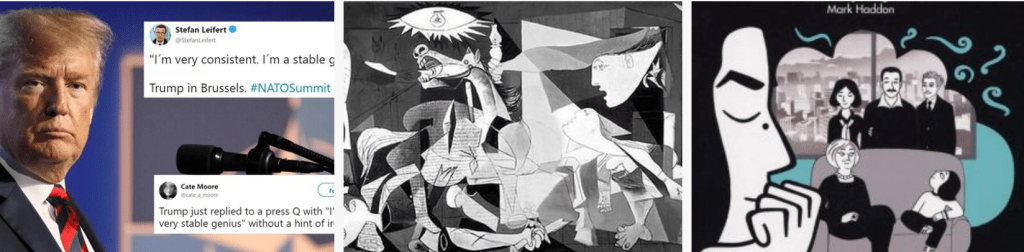
The images above are some possible examples of (images of) objects students could select (albeit not related to the same prompt).
○ Start with an image of your first object. Center it on the page, and make it around ¼ of the page in size, so it’s easy to see. This image should be taken by you, rather than an image you found online.
○ Explain what the image is and it’s real-world context in your life– where and how you used it. Or, if you’re talking about something that you don’t use yourself (i.e. a Donald Trump tweet), then explain the real-world context it exists in.
○ Make it clear that this is a real object, which you know about. For example, “This is the calculator I use in SL Maths, especially to graph functions –such as this one “f(x)=1/x”. The TI-84 allows me to graph functions without really understanding what functions even are. I still
sometimes have difficulty explaining why this function works like this, or why it is a rational function, but the calculator allowed me to know what every point on the graph looks like.”
○ Link the context of the image to your prompt question. Tell us what your object suggests is the answer to the prompt. For example, “This leaves open the question, of how much knowledge I have of functions.” (This example is continued in the members area).
○ Include obvious links between the object and the prompt question. Make sure these links are well-explained.
○ Make sure it’s clear how the “specific real-world context” of your object makes it a good example of the thing you’re trying to show (i.e. How the way I’ve been using the calculator could make it perhaps unclear whether my ability to graph the function would make it count as knowledge or not (Remember: the prompt we chose was 1. What counts as knowledge?, So
We’re always linking the object back to that prompt.
Object 2 (290 words)
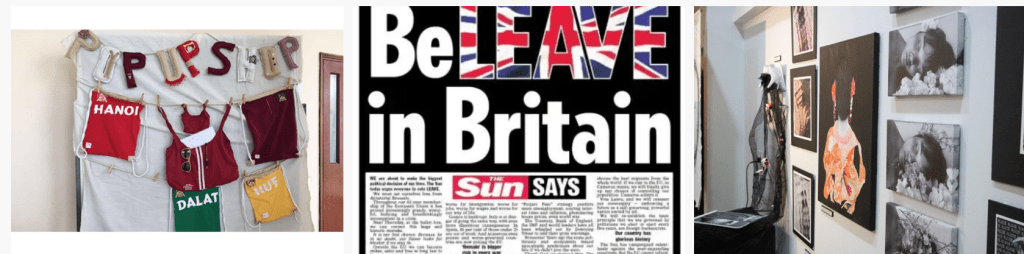
○ Show the image of your second object.
○ Explain the context of your second object and develop this explanation.
○ Link your explanation of the context to your prompt
○ Make sure the point you’re making about the prompt, using your second object, is not the same point you’ve made before.
Object 3 (290 words)
○ Show the image of your third object.
○ Explain the context of your third object and develop this explanation.
○ Link your explanation of the context to your prompt
○ Make sure the point you’re making about the prompt, using your thirdobject, is not the same point you’ve made before.
From the TOK Guide:
“Examples of the diverse kinds of objects students could select include:
A tweet from the President of the United States.
An image of the painting “Guernica” by Pablo Picasso.
The student’s own extended essay.
A basketball is used by the student during their physical education lessons.
The graphic novel The Colour of Earth by Kim Dong Hwa.
A painting created by the student in their DP visual arts course.
A refillable water bottle is provided to each student in a school
as part of a sustainability initiative.
A news article from the popular website “Buzzfeed”.
A photograph of the student playing in an orchestra.”
Conclusion (50 words)
○ Summarize and very briefly synthesize what your 3 objects have shown is the answer (or are the answers) to your prompt question.
○ Use your object to comment on the Prompt question and to talk about how Theory of Knowledge manifests in the world around us.
Showcase the exhibition
As a final step, you will showcase your exhibition.
This stage is not part of the formal assessment.
When you have sorted out all the formalities, you get the opportunity to showcase your exhibition. This can take many different forms. This stage is not part of the formal assessment, so it should be a fun opportunity to show what you have done in TOK to other students,parents and maybe even visitors. Your teachers and your school can choose how they will address this stage. You could hold a TOK exhibition within your normal TOK classes, classes of TOK students in the same school, or different schools, could host exhibitions for each other, you could host an exhibition for younger students in the school, parents and members of the school community (eg open evening, IB DP information evening). You can also create a virtual exhibition. A school could host a combined event celebrating the Primary Years Programme exhibition, Middle Years Programme personal project, and TOK exhibition.

Word count, referencing and other formalities
Objects can be physical or digital.
Digital objects must be correctly referenced.
Teachers can give guidance, but they cannot edit the draft.
The exhibition is intended to take place in the first year of TOK teaching.
It is strongly recommended that the exhibition is based on the themes discussed in class.
The maximum overall word count for everything about the exhibition is 950 words; (all the three objects together).
BUT it does not include possible text written on the objects, references, bibliographies, (short) footnotes, acknowledgements etc.
These 950 words should be produced in one single file.
Examiners will not read past 950 words.
All work should be individual.
The work must be your own.
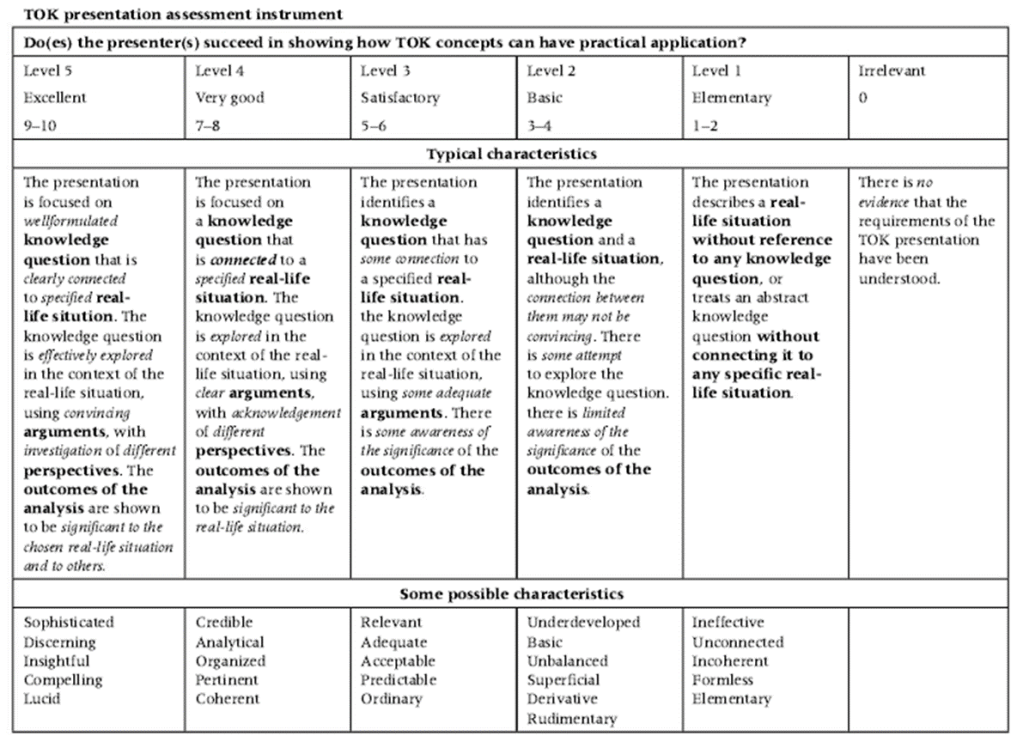


[…] The TOK Exhibition Commentary Structure […]
BeğenLiked by 1 kişi