




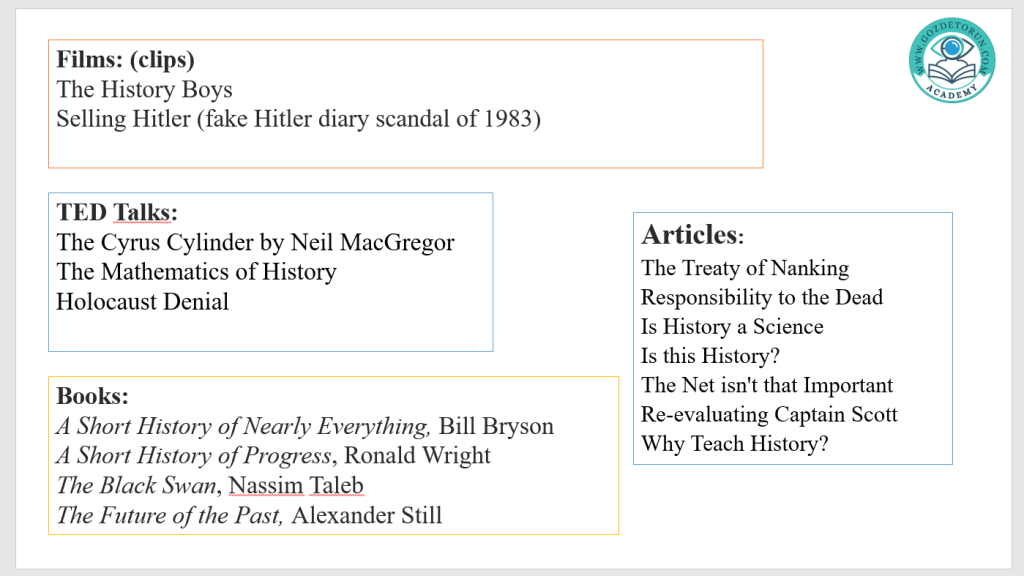
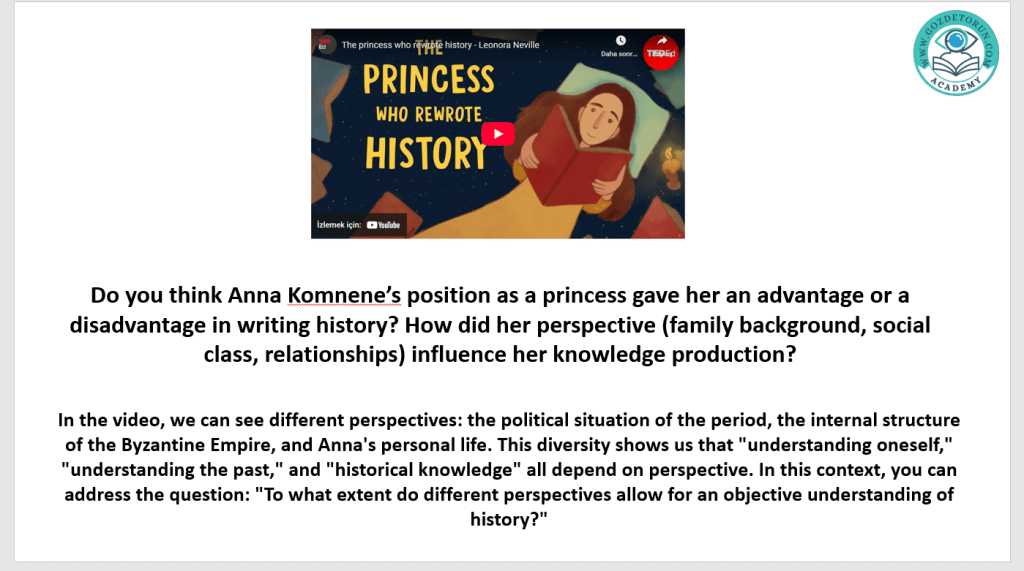
TED Talks:
The Cyrus Cylinder by Neil MacGregor
The Mathematics of History
Holocaust Denial
https://www.bbc.co.uk/programmes/genres/factual/history
https://www.project2061.org/publications/sfaa/online/chap10.htm
https://cliopolitical.blogspot.com/2005/08/introduction-to-historical_112482482753969170.html
https://sourcebooks.fordham.edu/mod/modsbook.asp
https://sourcebooks.fordham.edu/ancient/asbook.asp
https://www.hyperhistory.com/online_n2/History_n2/a.html
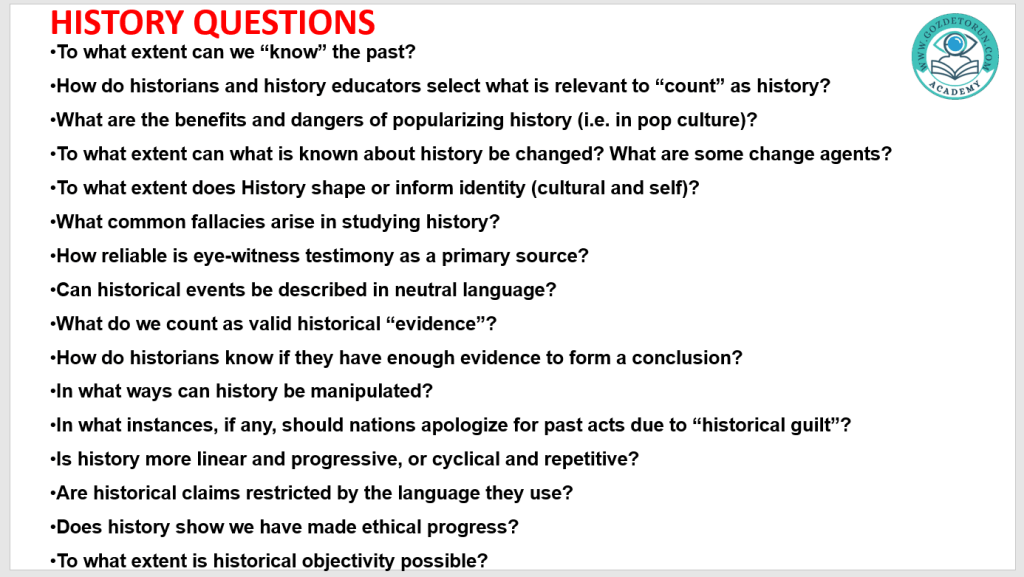
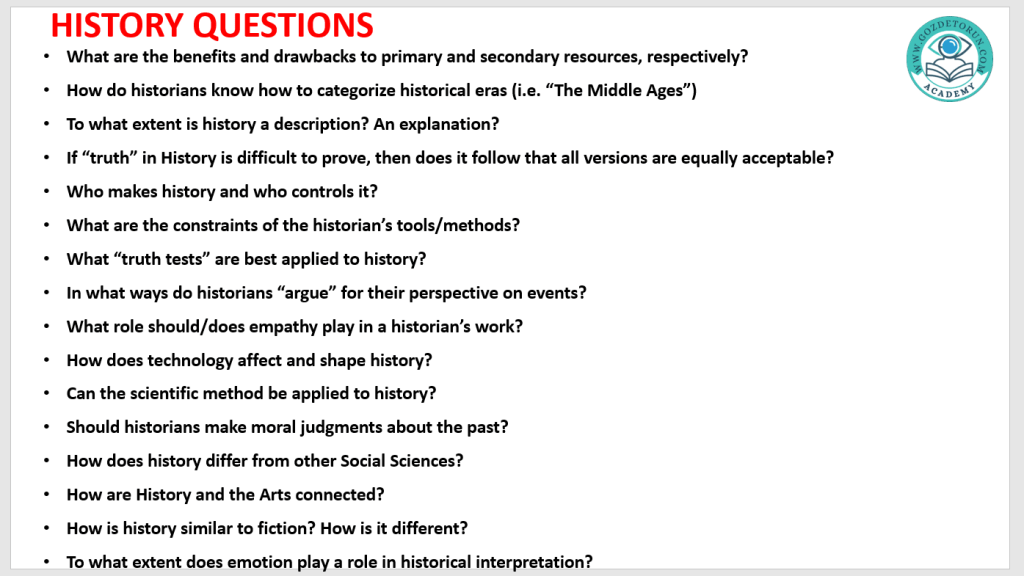
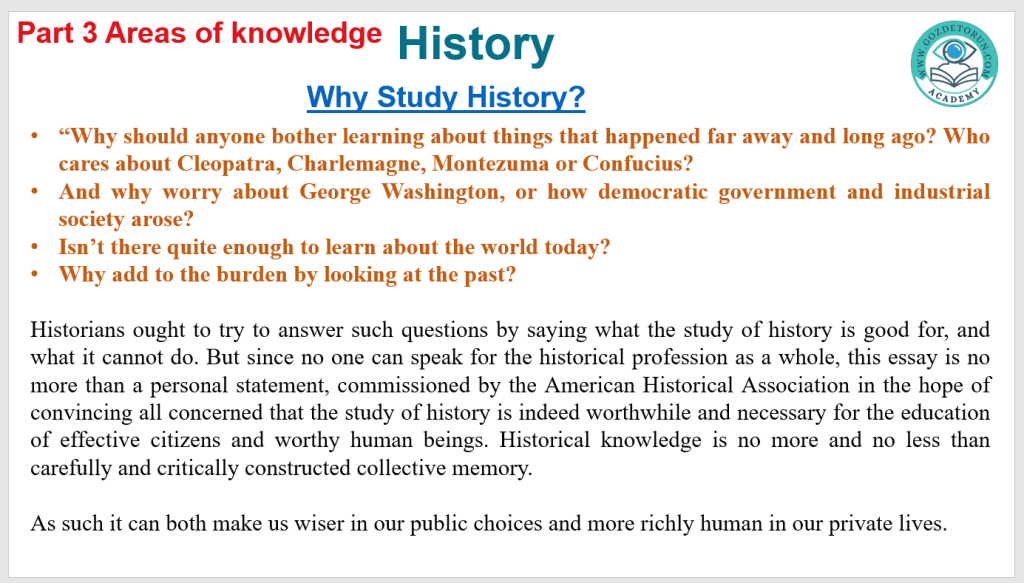
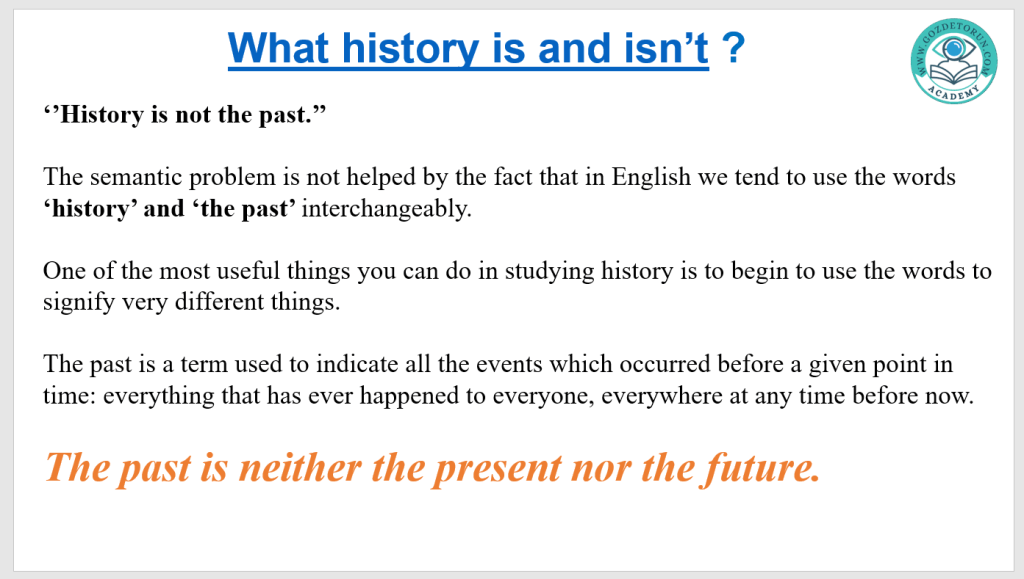
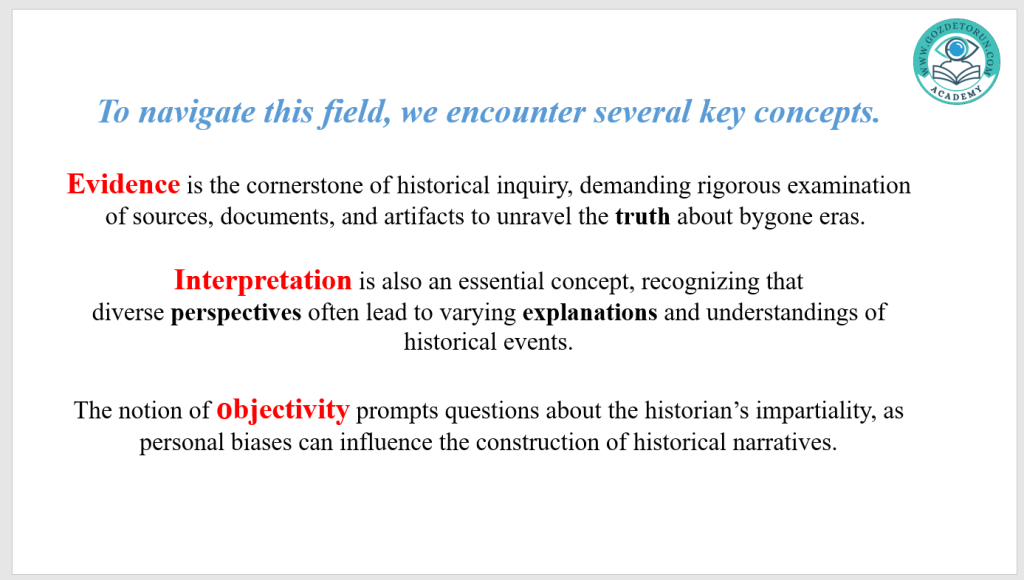

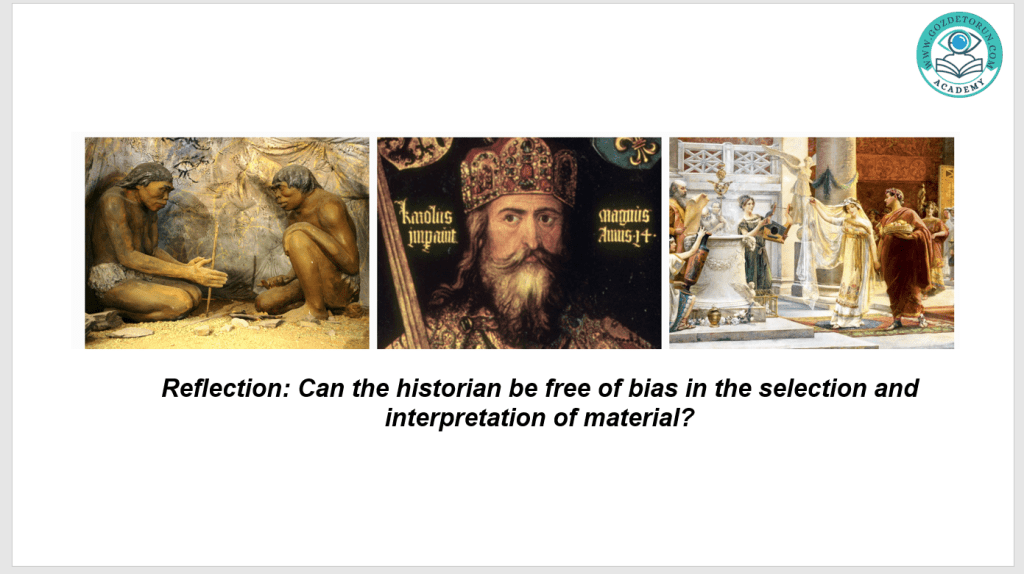
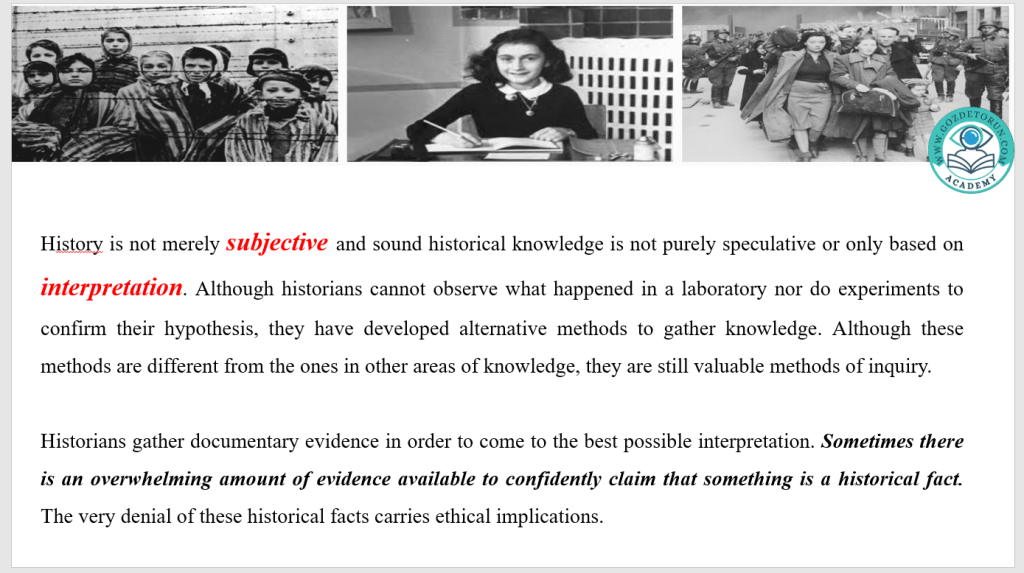
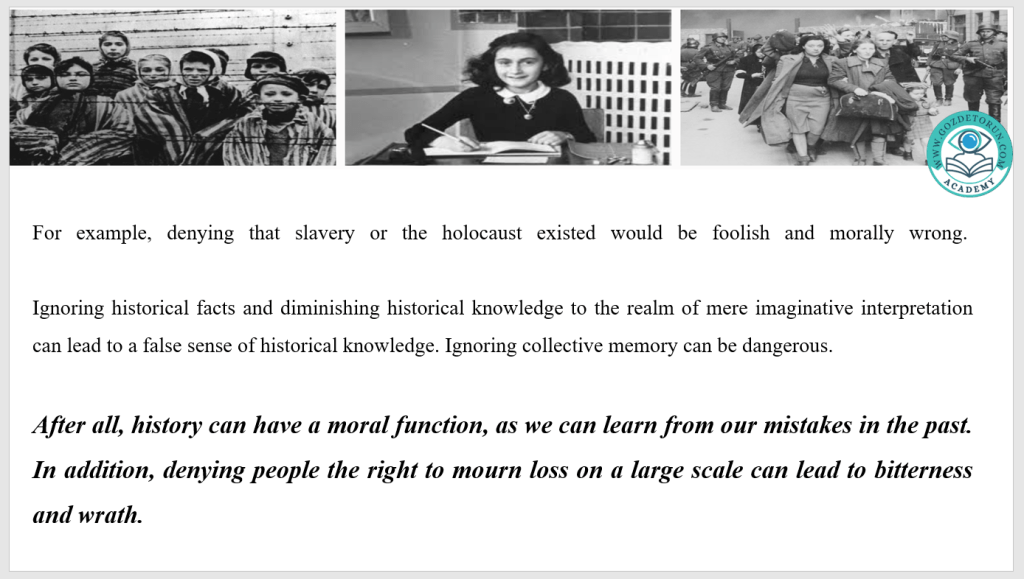
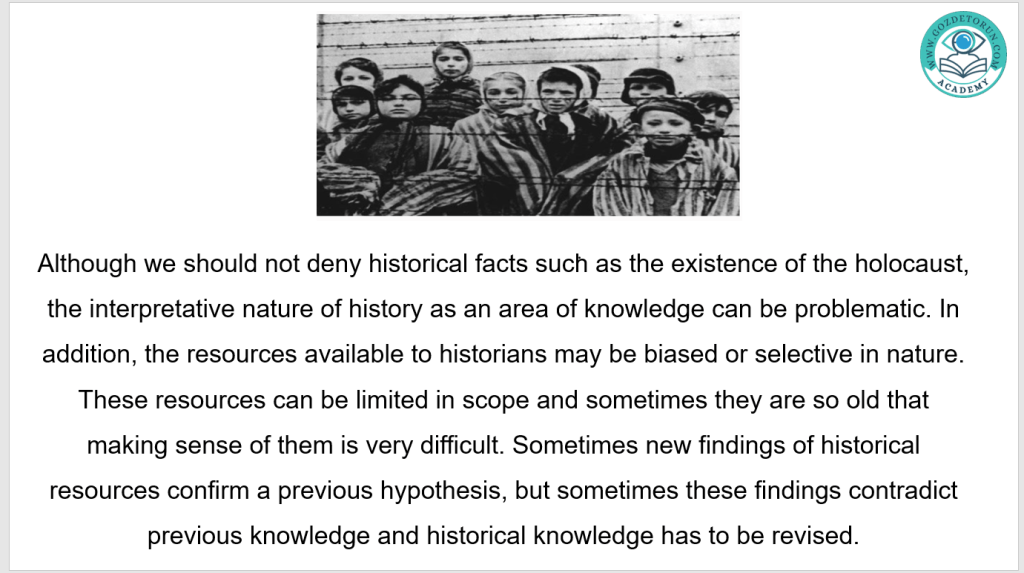
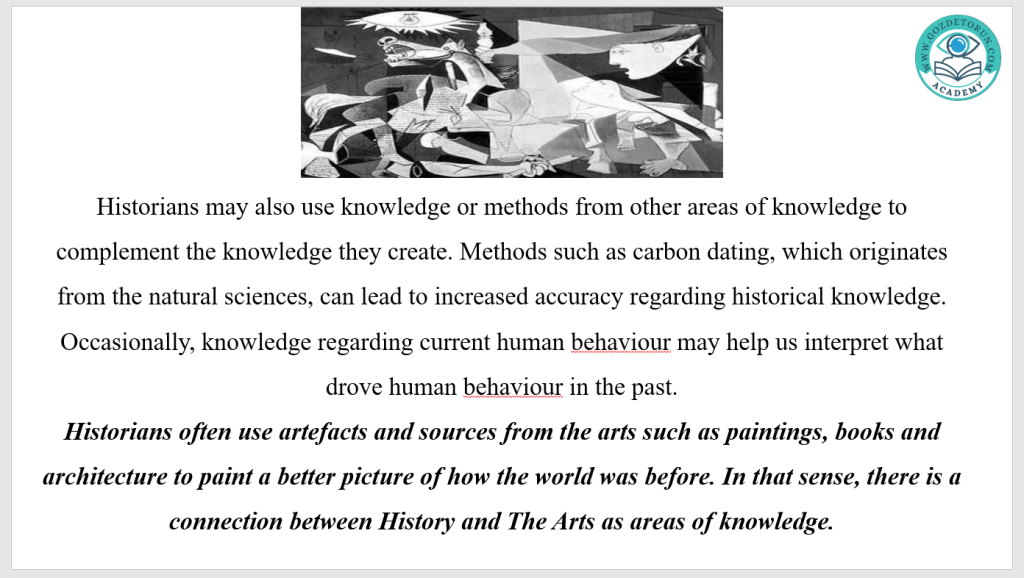
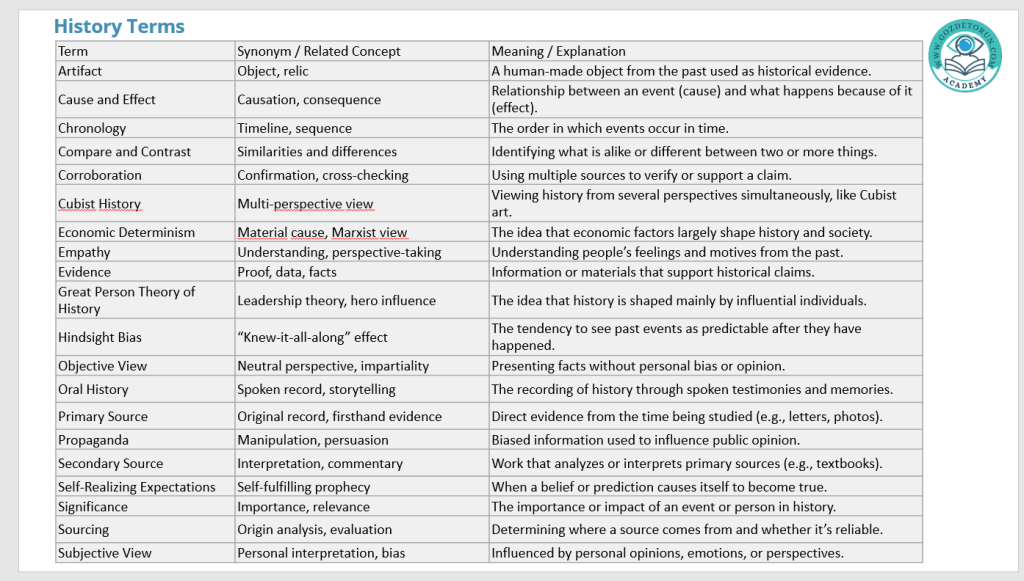
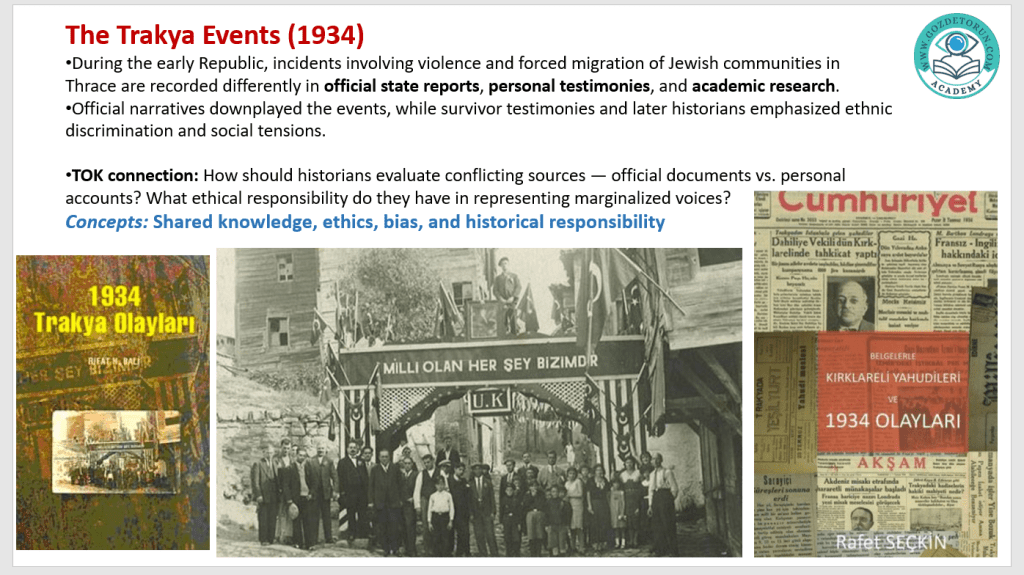
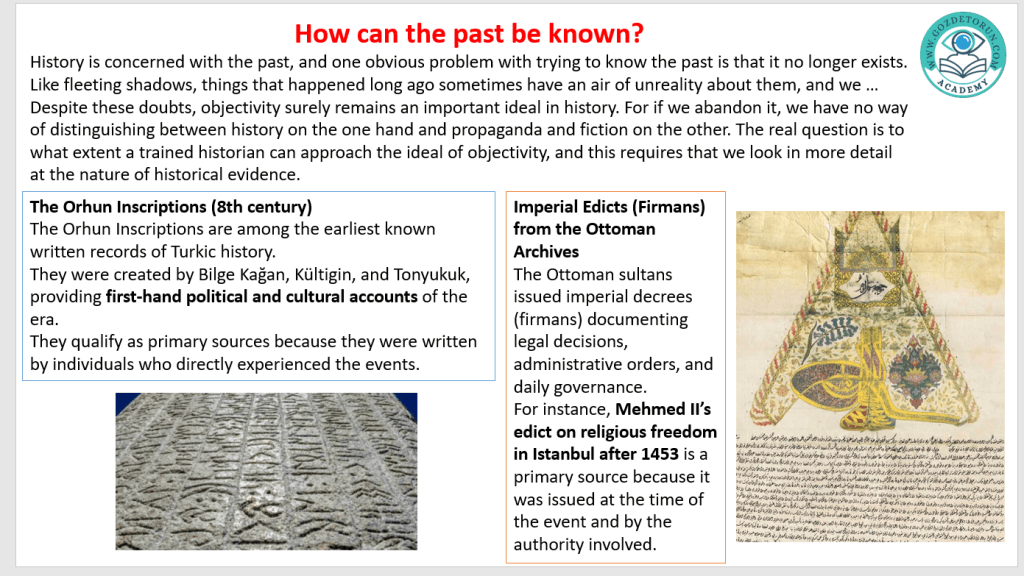
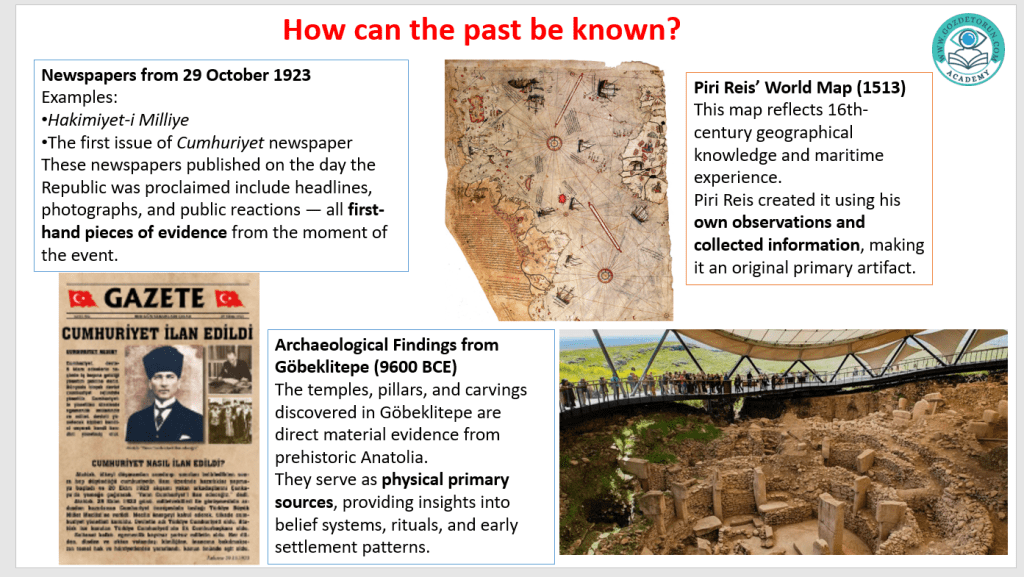
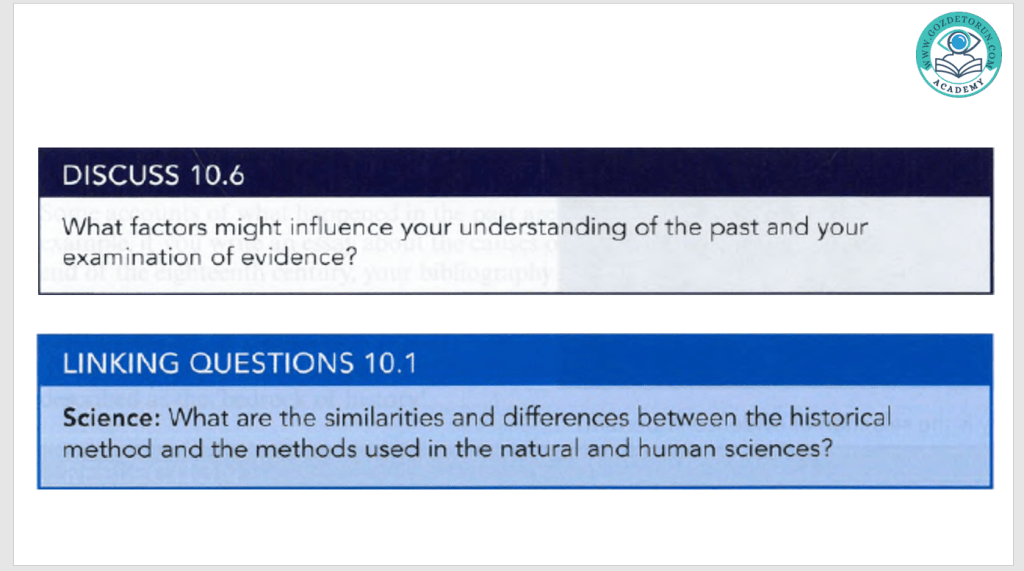
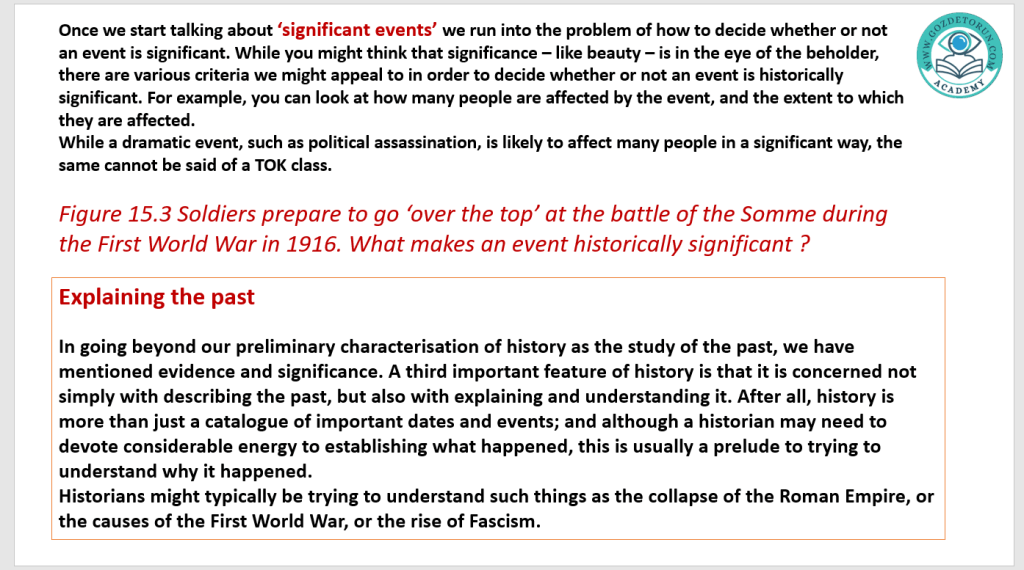
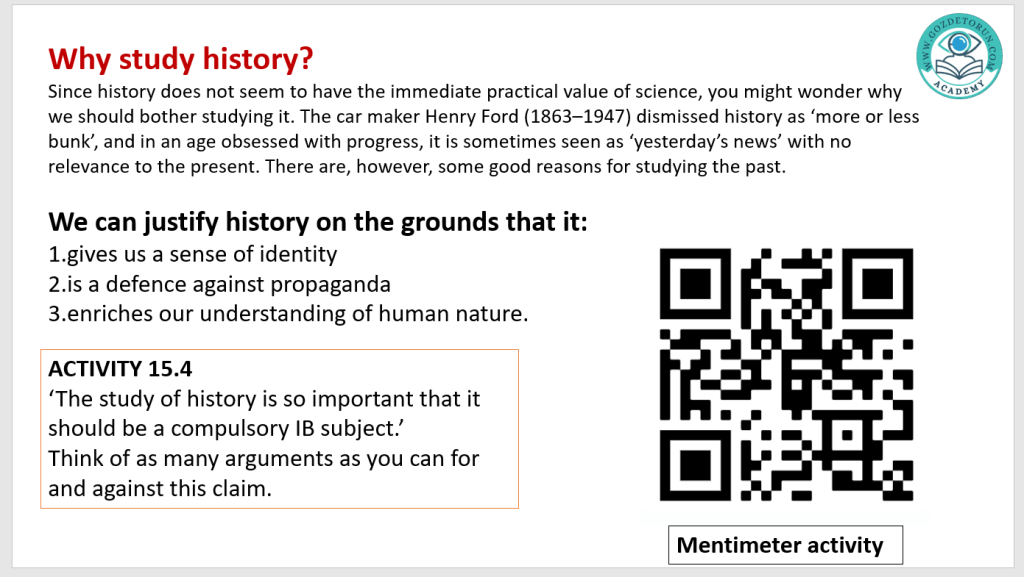
Good historians aim to paint an accurate picture of the world as it once was, yet this is not always possible. We are often faced with a lack of historical data, biased records and politically influenced historical propaganda. There are plenty examples of history being rewritten to suit the purpose of people in power. We can shape our historical memory. Memory plays a substantial role as a tool we use to create historical knowledge.
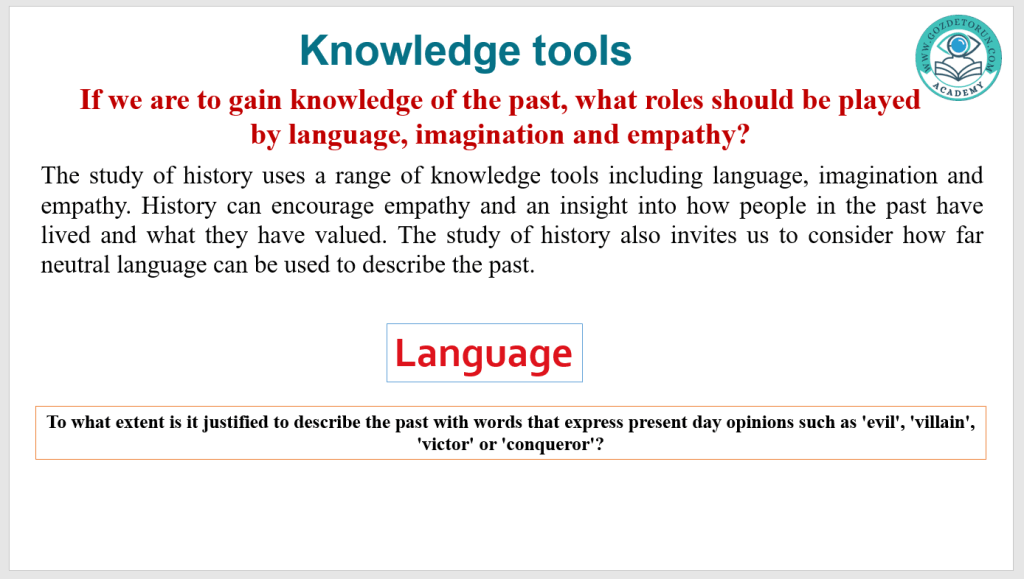
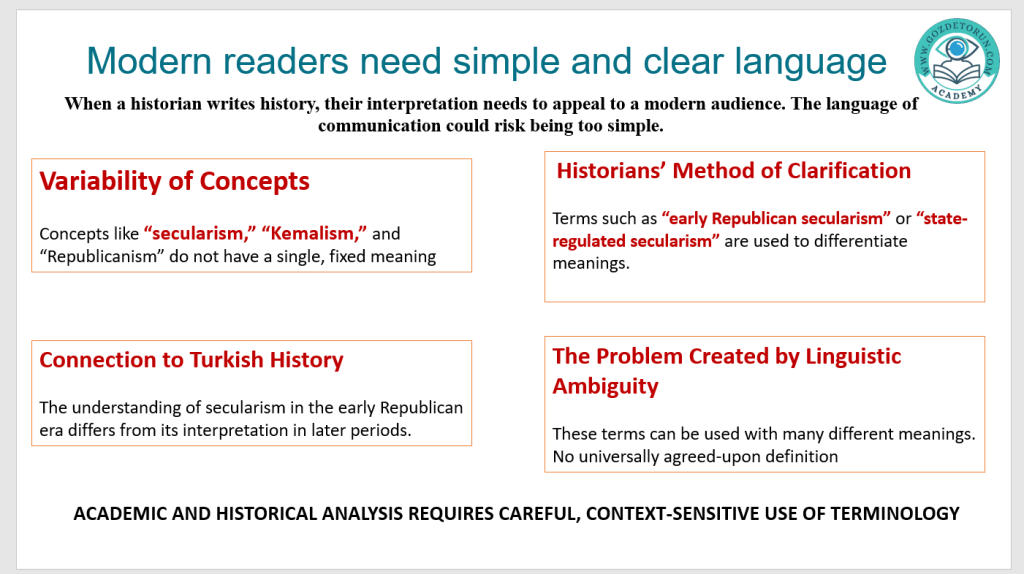
Many communities are keen to remember their past and some people feel that they need to ‘make history’ before they die. Language plays a substantial role in the recording of history and passing on of collective memory. Some knowledge communities draw on oral history, whereas others record data in writing or symbols. Much historical knowledge has been passed on through language via textbooks. The language of these textbooks is often emotionally coloured. Other (dominated) cultures were often represented as inferior and cruelties of imperial powers were either ignored or minimised.
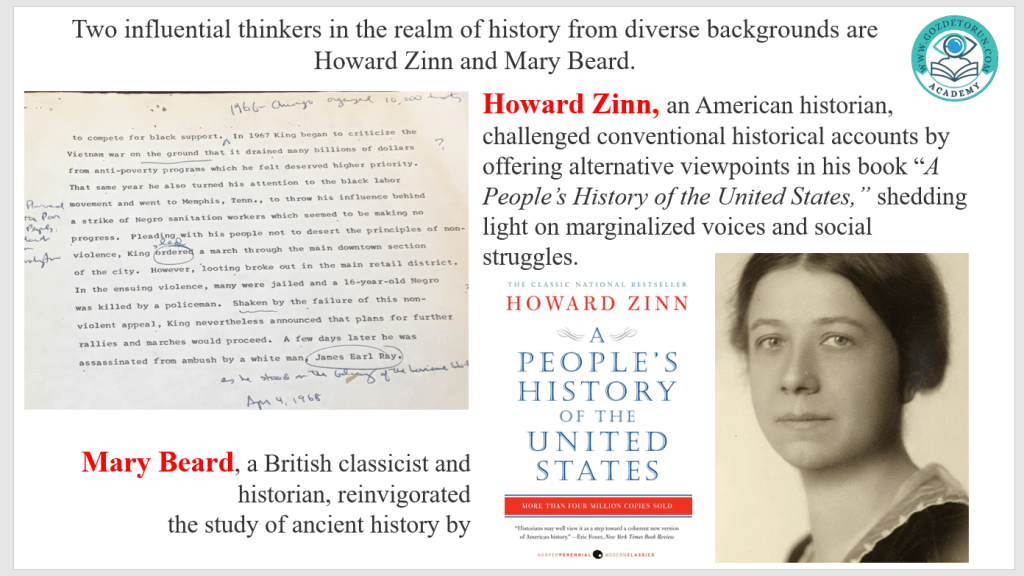
History has sometimes been taught as a single story, whereby the voices of marginalised groups, including those of women, were ignored. In older history textbooks, much history seems to be presented as fact. There is hardly any recognition of the interpretative nature if the discipline. Although the nature of history textbooks has changed over the years, you may still wonder on what basis the materials of your textbook/curriculum has been selected.
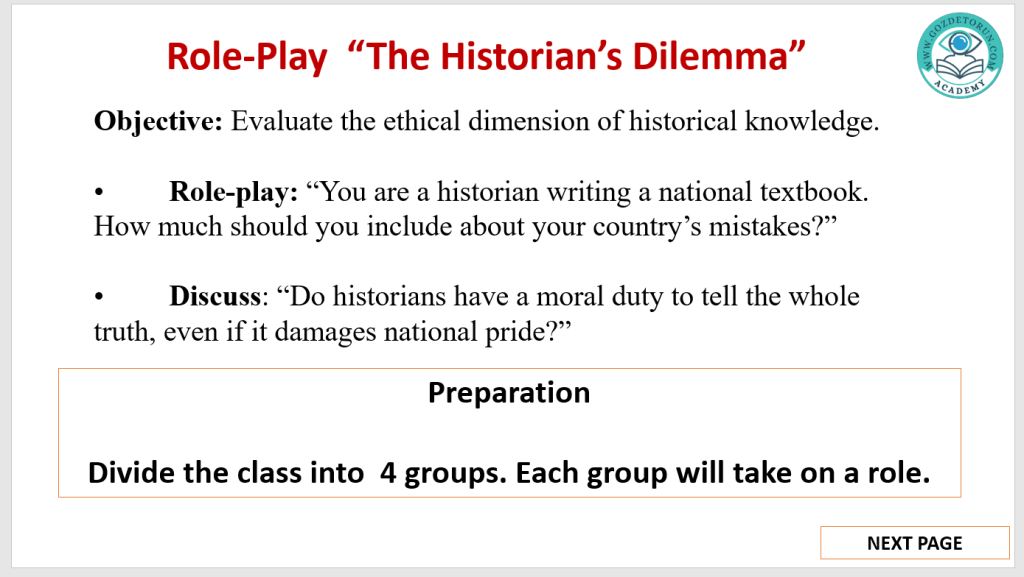
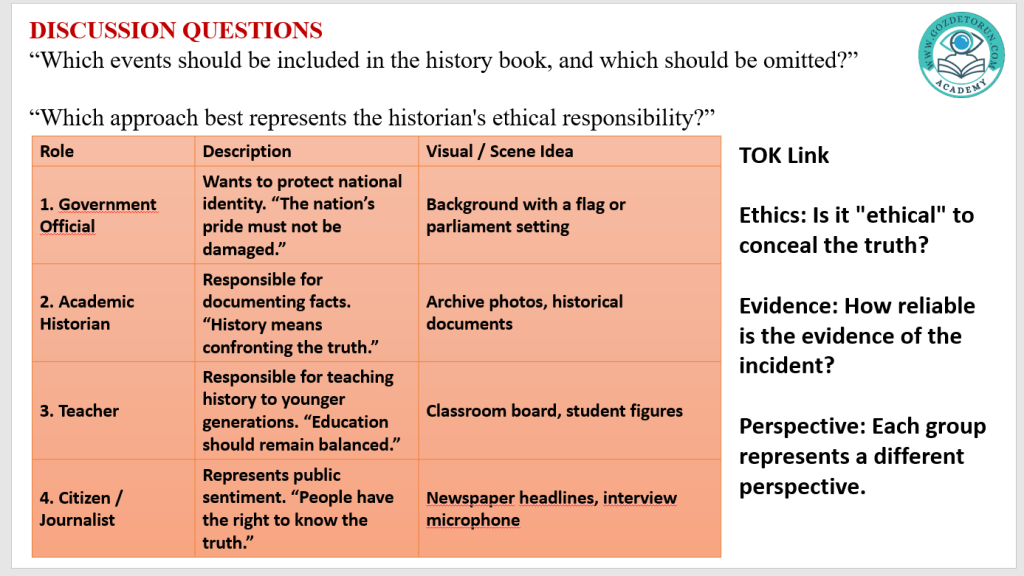
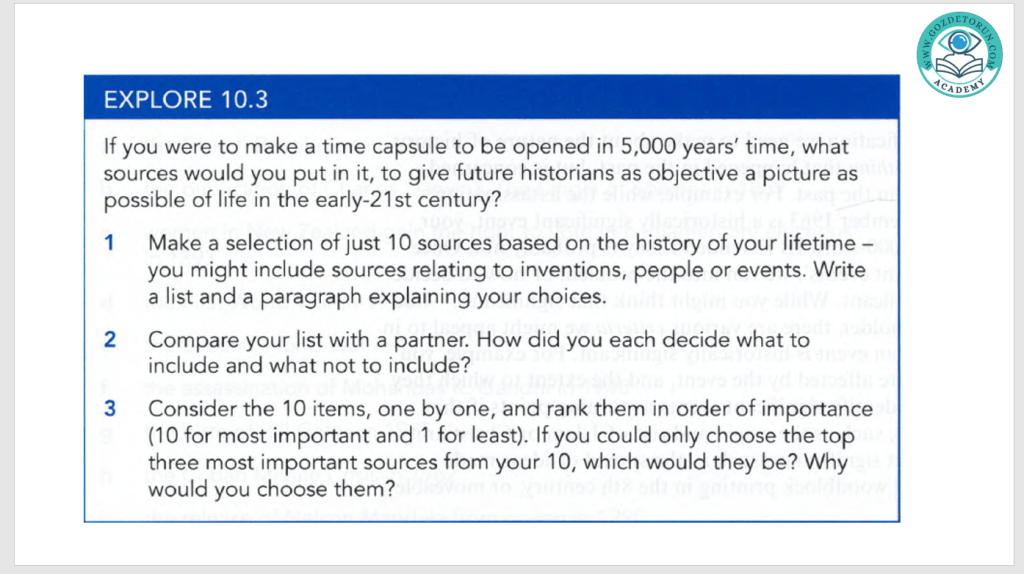
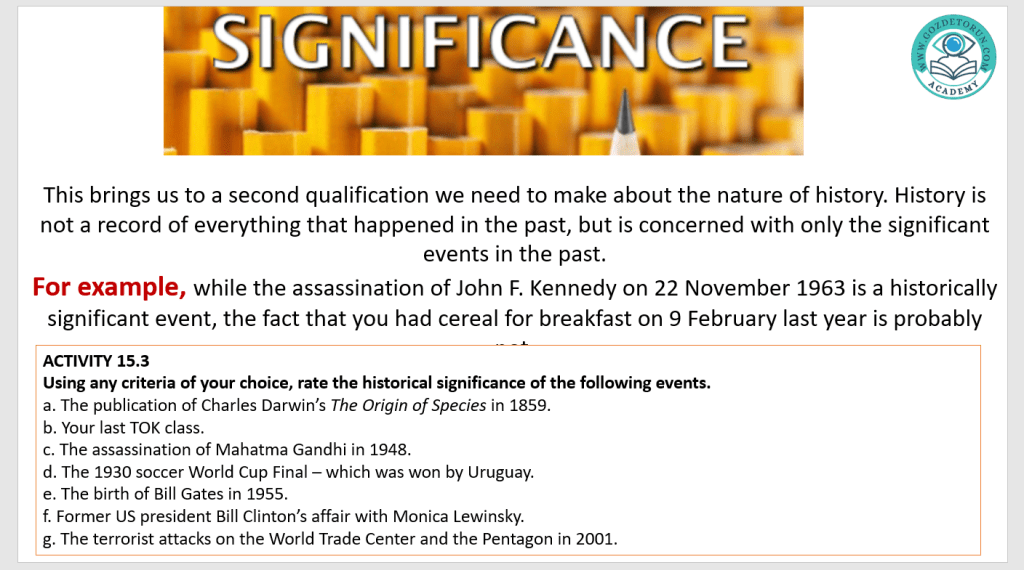
What kind of historical events does your school, exam board or country consider important enough for it to be studied and why? Do you agree with this selection of events? The selection of events as well as the interpretation of evidence almost inevitably carry with them an element of subjectivity. The choice of history textbooks and what does or does not become part of a nation’s history curriculum has been highly debated by politicians, authority figures, activists and educators. History lessons can be a powerful tool to shape and manipulate how we know.
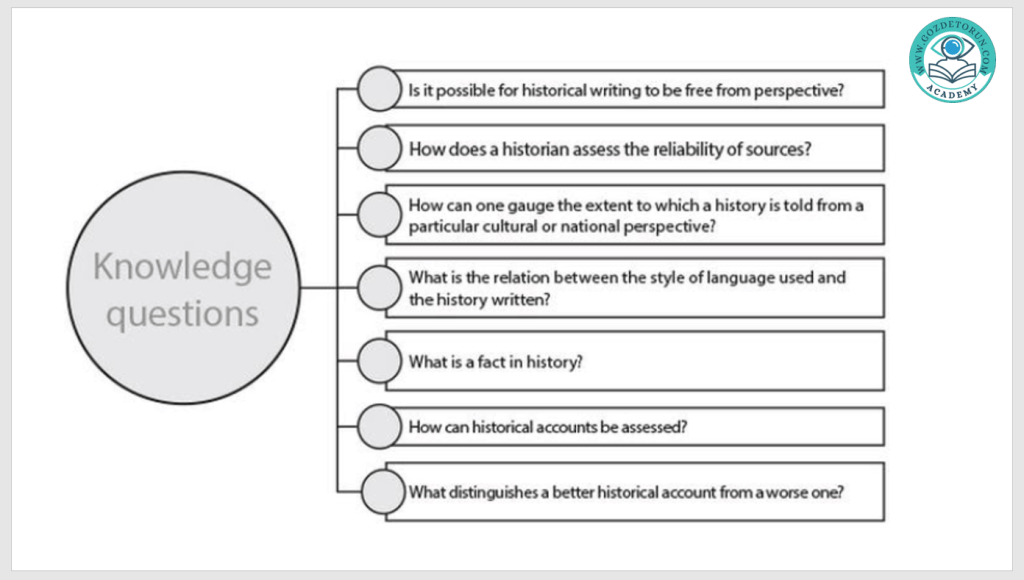
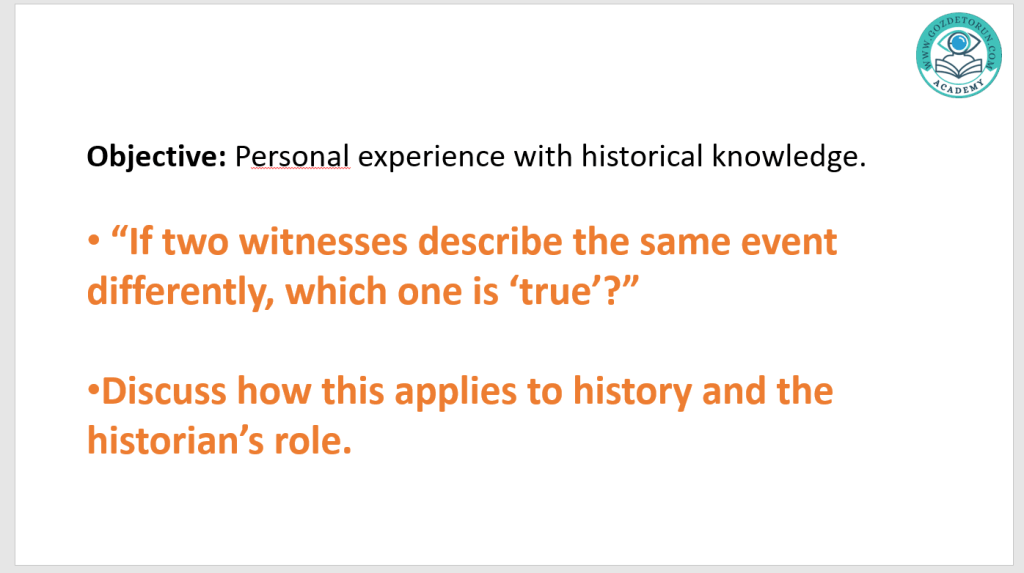
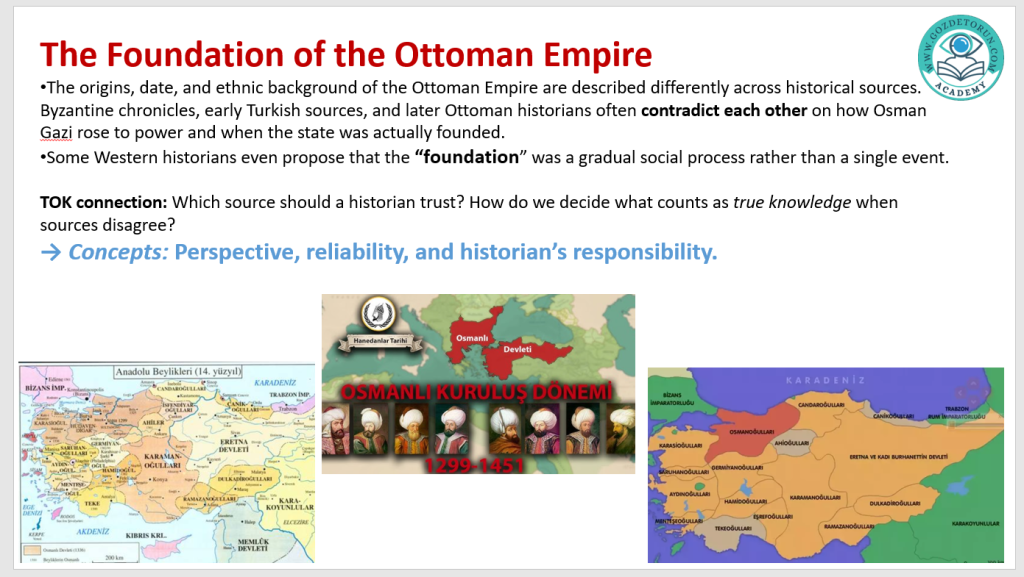
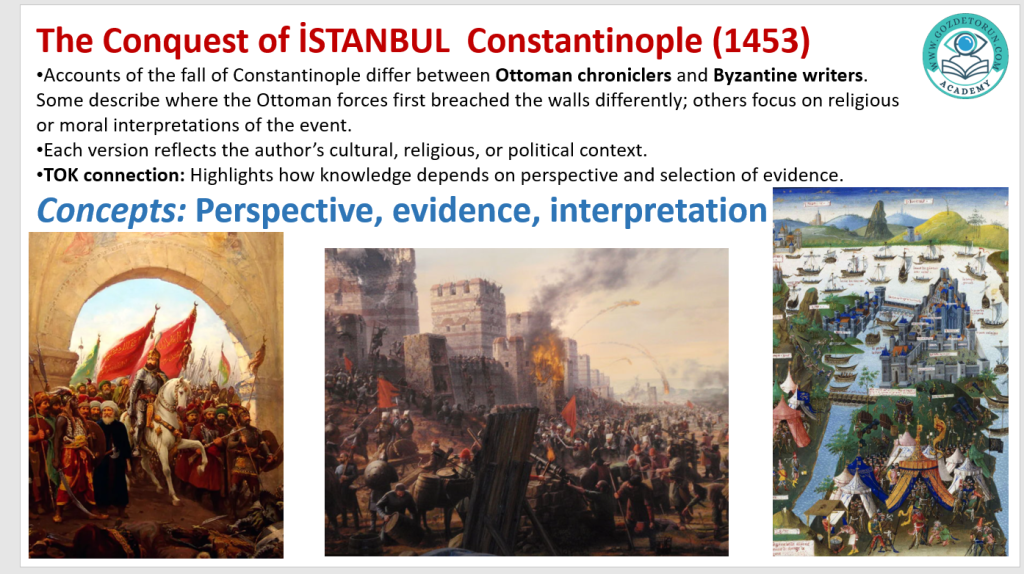
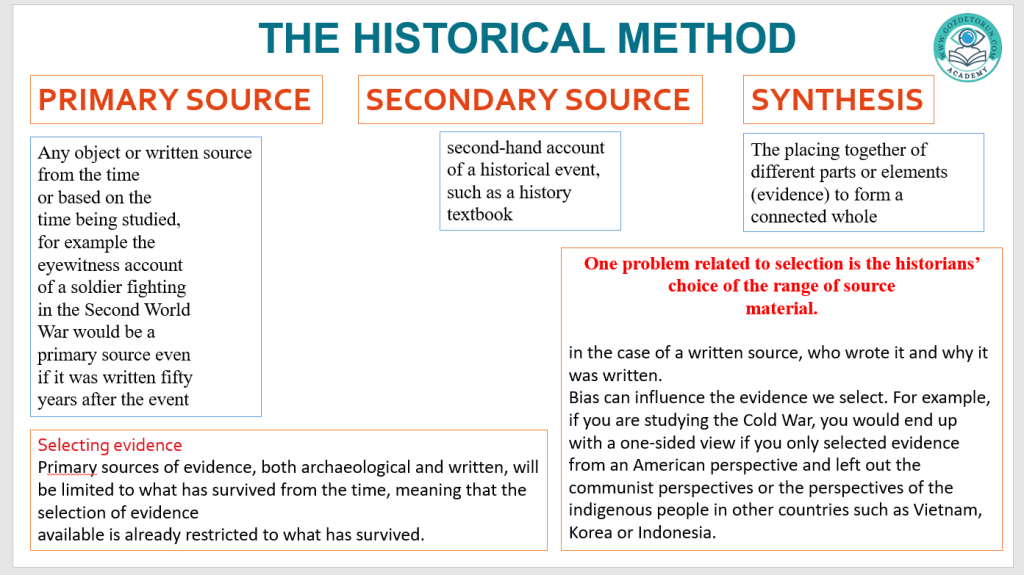
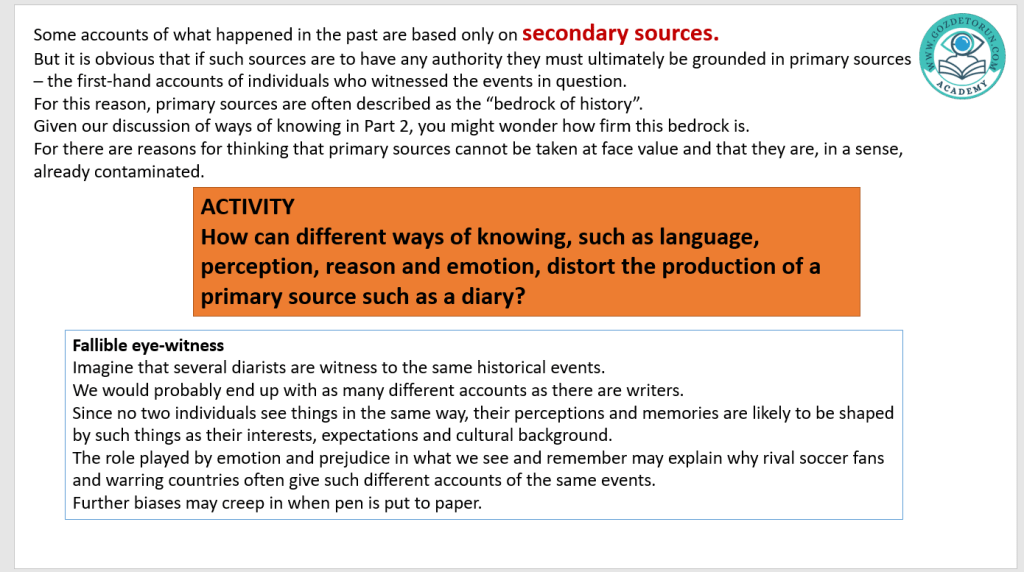
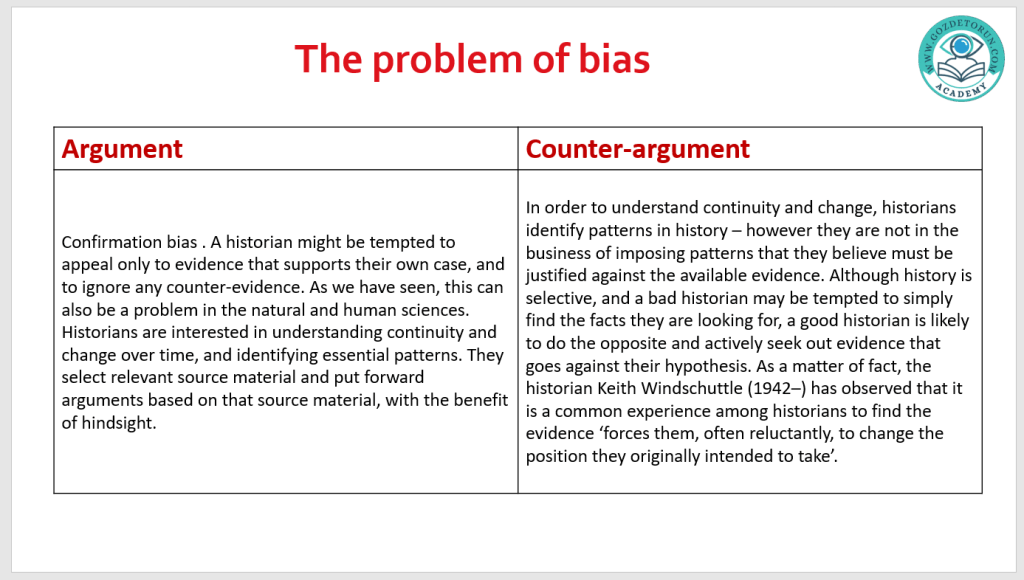
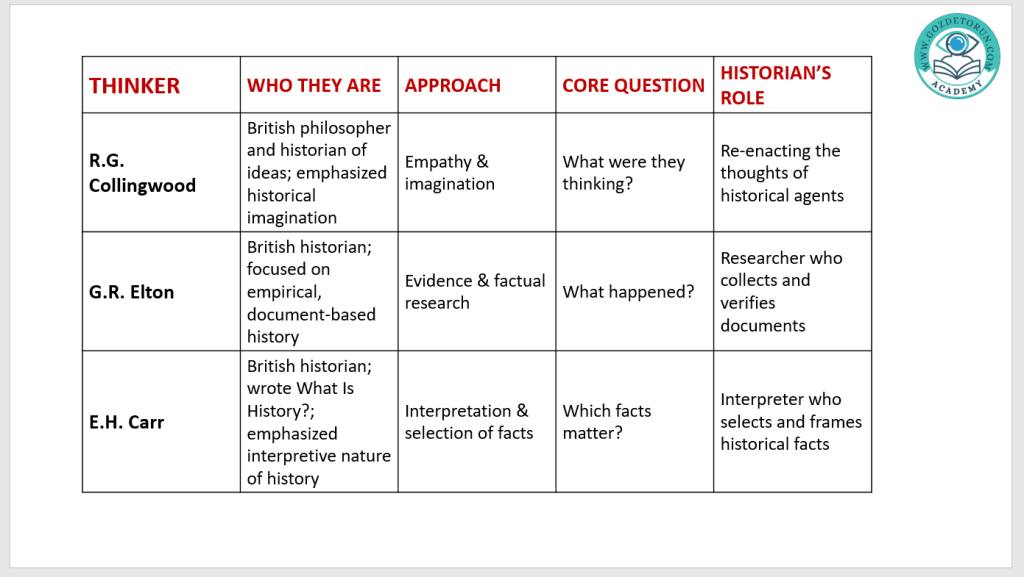
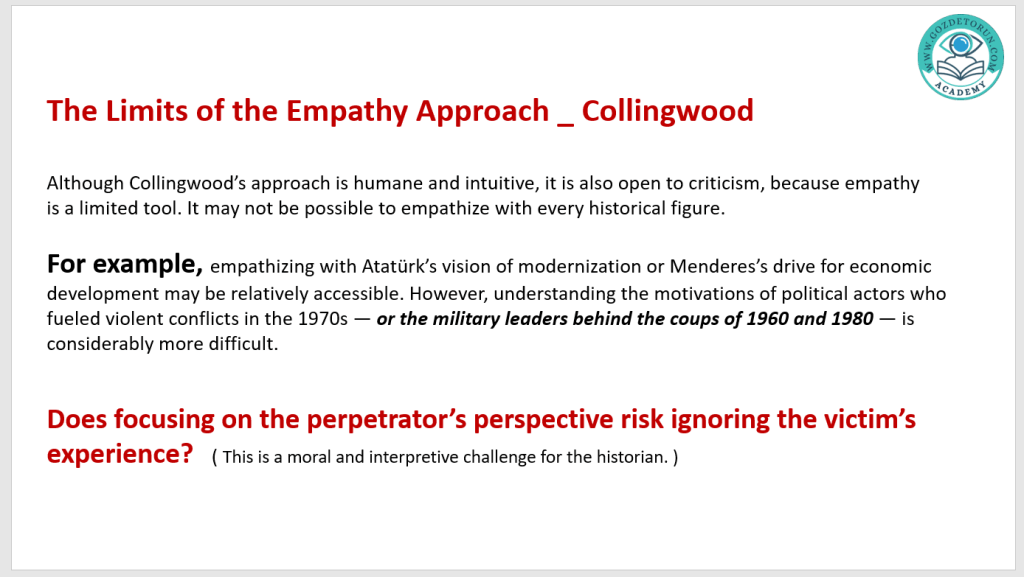
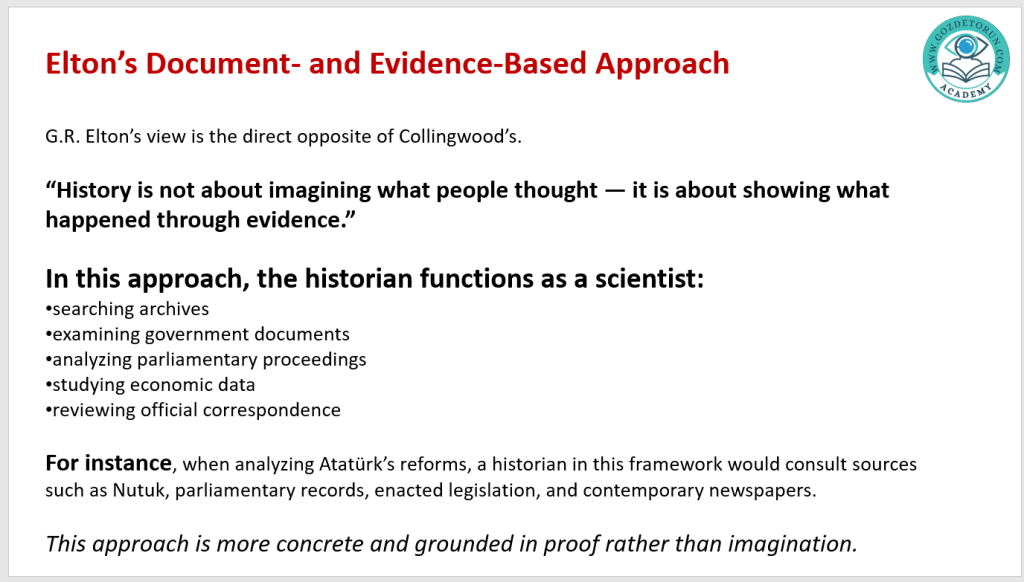
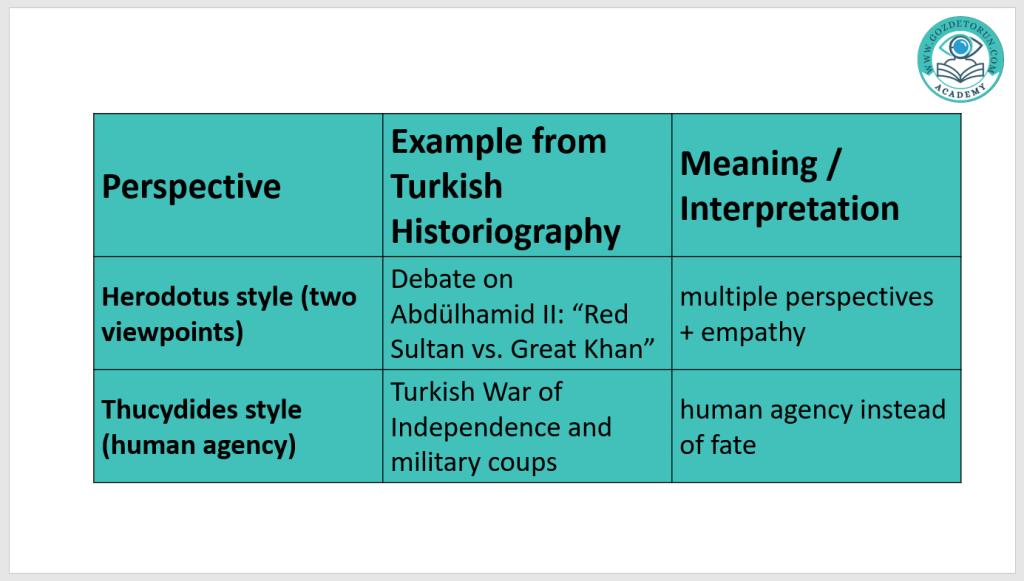
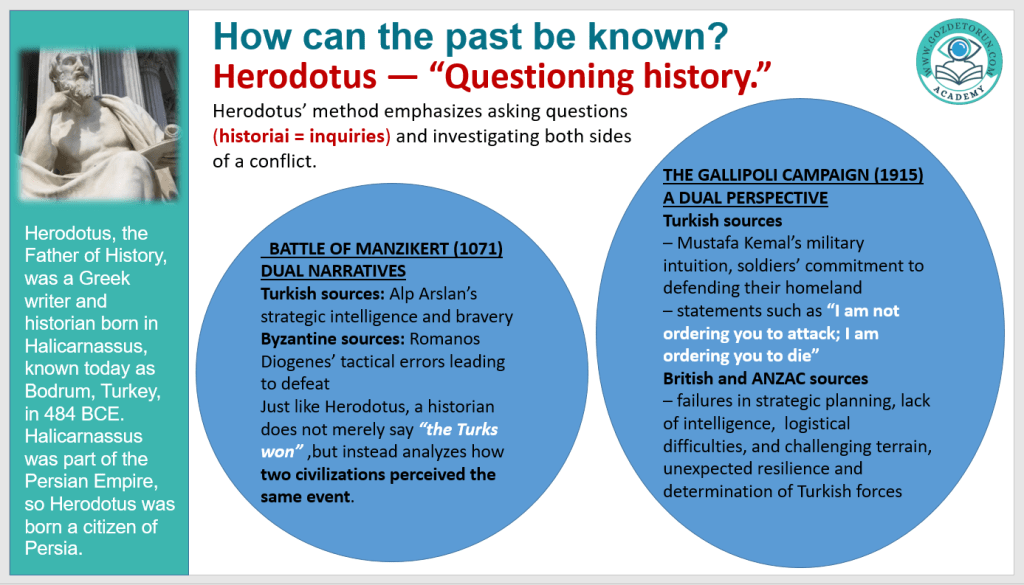
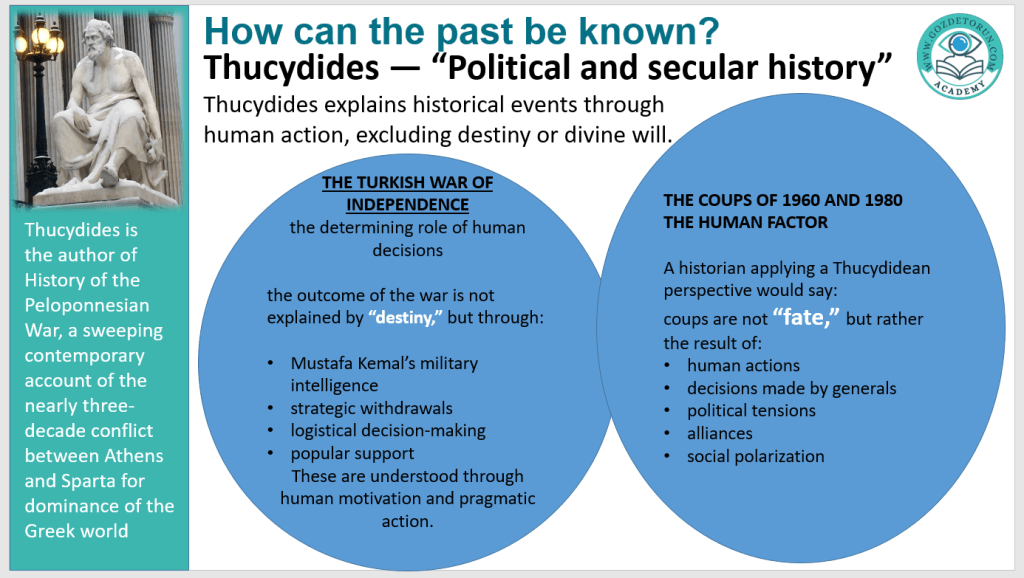
Current history lessons (hopefully) allow for an exploration of different perspectives and possible interpretative difference when faced with the same “facts”. It is important to understand that there are several possible issues with the interpretations of historical sources. The sources themselves may be biased and the interpretation of these sources can be subjective. In addition, you can select the sources to suit your agenda. However, the inclusion of a range of perspectives may lead you closer to genuine historical knowledge. The evaluation of the validity of historical knowledge claims may lead to the elimination of invalid and contradictory knowledge. Sometimes parts of the historical knowledge map needs to be re-written. A relativistic approach to history cannot generally be maintained (you cannot both claim the holocaust happened and that it did not happen). The inclusion of a wider range of sources may lead to more detailed knowledge maps.
Writing history and perspective



https://create.kahoot.it/share/history-aok-2025-tok-lesson-gzd/23a88052-9dd2-4364-b773-1f83e027ba5b






 gozdetorunacademy